Yükleniyor
İçerik yükleniyor, lütfen bekleyin.
The 2,500-year medical history of rhinoplasty: from ancient India's Sushruta to Tagliacozzi, Jacques Joseph, and today's piezo rhinoplasty — a comprehensive journey.
Quick Summary
Rhinoplasty (nose reshaping surgery) has a 2,500-year medical history. From the first nose reconstruction described by the Indian surgeon Sushruta around 600 BCE, to today's piezo rhinoplasty and 3D simulation techniques, this journey is one of medicine's oldest and most continuously evolving fields. In this article, we explore the great surgeons who shaped modern rhinoplasty, the eras they lived in, and how today's techniques came to be.
Key insight: Rhinoplasty is not merely an aesthetic surgery — it is the ancestor of reconstructive medicine, with roots in war injuries, social stigma, and survival.
1. Ancient India (600 BCE): Sushruta, the "Father of Surgery"
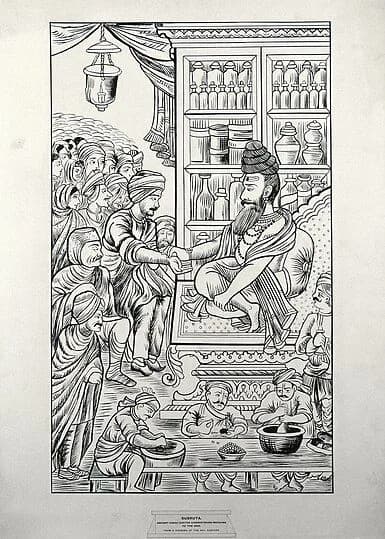
The history of rhinoplasty stretches far beyond modern surgery. Sushruta, an ancient Indian physician, authored the Sushruta Samhita — the world's earliest known surgical atlas, written around 600 BCE.
Sushruta's Method
In ancient India, nose amputation was a common form of punishment for criminals, adulterers, and prisoners of war. These individuals were marked socially through this disfigurement. Sushruta developed a solution:
This technique, known today as the "Indian Forehead Flap," is still used in modern reconstructive surgery.
Sushruta's Significance
📜 The Sushruta Samhita has been translated into 12 languages and is still studied in medical history programs worldwide.
2. Ancient Egypt and Early Civilisations
The Edwin Smith Papyrus (1600 BCE) shows that ancient Egyptians treated broken noses with splints — the earliest documented nasal surgery. Egyptians would:
This is the ancestor of today's plaster cast technique.
3. Roman and Byzantine Era (1st – 6th Century CE)
Aulus Cornelius Celsus (25 CE) wrote "De Medicina" in Rome, in which he detailed nasal and lip reconstruction techniques. His work formed the foundation of European surgery for centuries.
In the Byzantine era, Oribasius and Paulus Aegineta (7th century) compiled and transmitted this knowledge to Arab and Islamic surgical traditions. Through this chain, rhinoplasty knowledge moved from East to West.
4. Renaissance (16th Century): Tagliacozzi's "Italian Method"
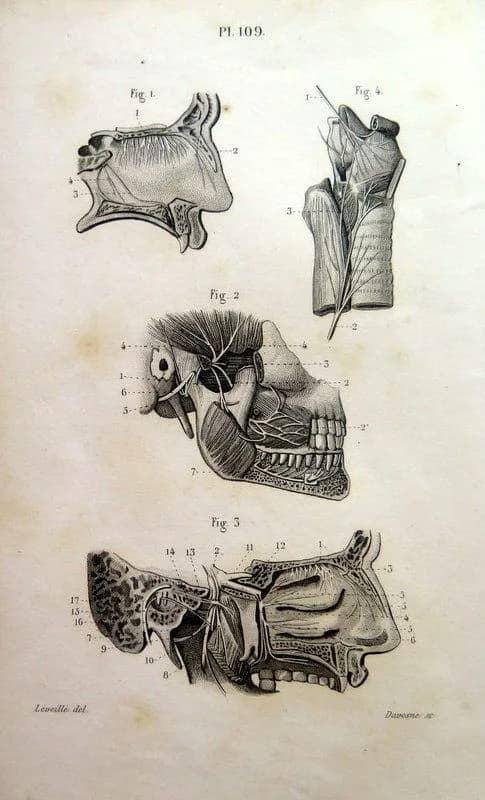
Italian surgeon Gaspare Tagliacozzi (1545–1599) revolutionised rhinoplasty at the University of Bologna.
Tagliacozzi's Pioneering Technique
For patients who lost their noses to duels or syphilis:
1. Skin from the inner arm is partially cut (not fully removed)
2. The arm is attached to the patient's face with a special harness
3. 2-3 weeks of bonding allows the skin to graft to the face
4. The skin is then released from the arm and sculpted into a nose
This technique became known as the "Italian Rhinoplasty" and was published in his 1597 work, "De Curtorum Chirurgia per Insitionem."
⚠️ The Catholic Church viewed this surgery as "interfering with God's work" and Tagliacozzi was denied burial in consecrated ground. The surgical knowledge was forgotten for 200 years.
5. The 19th Century: Birth of Modern Rhinoplasty
The Industrial Revolution and the discovery of anesthesia (1846) revived surgical innovation. Two figures dominated this era:
John Orlando Roe (1845–1915) — United States
American ENT surgeon John Orlando Roe performed the world's first "closed rhinoplasty" in 1887:
This was rhinoplasty's first purely aesthetic application. Roe proved that cosmetic surgery without visible scarring was possible.
Jacques Joseph (1865–1934) — Germany
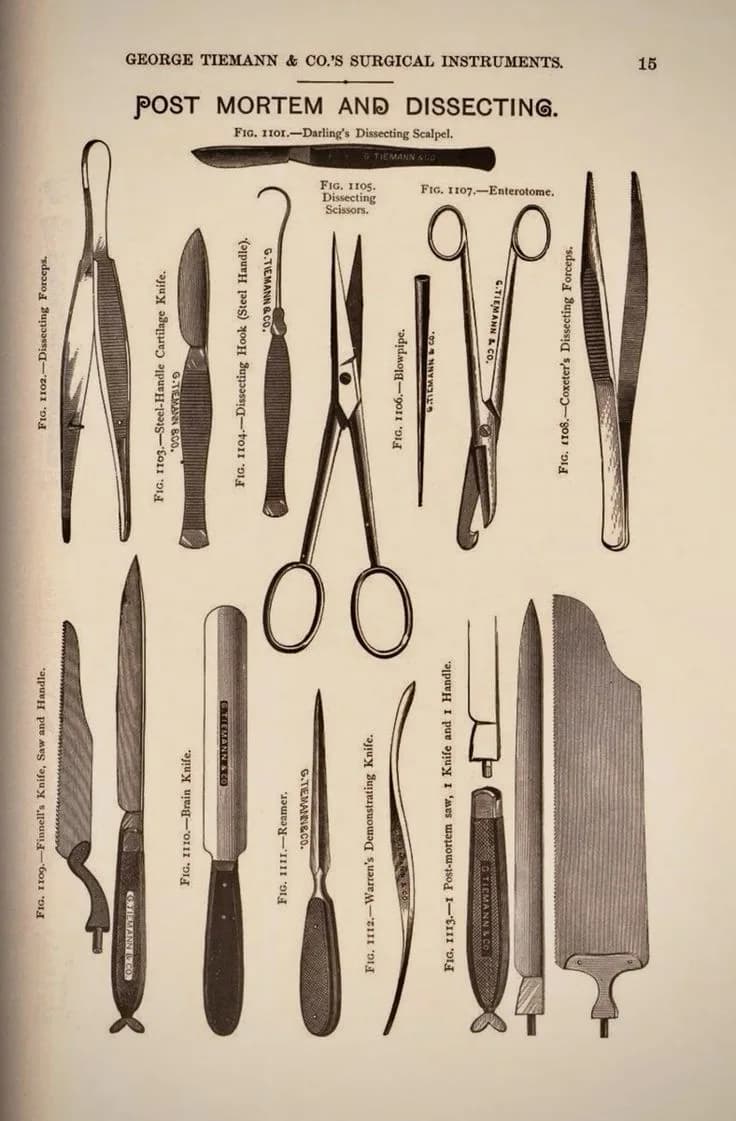
Berlin plastic surgeon Jacques Joseph treated a patient in 1898 who had been unable to find work because of his "large nose." Joseph's surgery transformed the patient's life.
Joseph's contributions:
📚 The "Joseph rasp" (bone file) bears his name and is still used in modern operating rooms.
6. The 20th Century: Maturation of Technique
Open vs. Closed Rhinoplasty Debate
Two major approaches developed throughout the 20th century:
| Technique | Pioneer | Advantage | Disadvantage |
|---|---|---|---|
| Closed | Joseph, Aufricht | No visible scar, faster healing | Limited surgical visibility |
| Open | Padovan (1970) | Clear view, precise work | Small columellar scar |
In the 1970s, Wilfred Goodman and Jack Anderson popularised the open technique, making complex cases (revisions, advanced deformities) safer to perform.
Aesthetic and Ethnic Rhinoplasty
In the second half of the 20th century, surgeons began preserving ethnic identity in rhinoplasty:
The "one-size-fits-all" mindset was abandoned. Personalised planning became the standard.
7. Today: Ultra-Modern Techniques
Piezo Rhinoplasty (Ultrasonic Surgery)
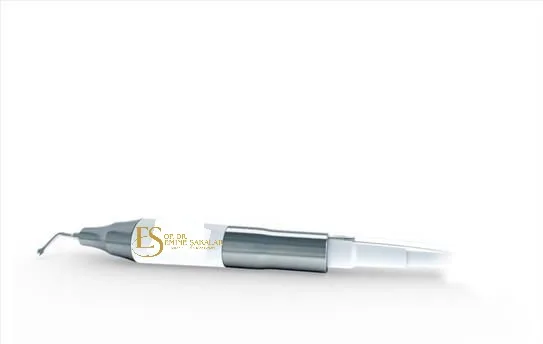
Systematised by Olivier Gerbault (France) in the 2010s, piezo rhinoplasty has begun to replace traditional hammer-and-chisel methods.
Advantages:
Op. Dr. Emine Şakalar performs **piezo rhinoplasty** in Eskişehir, Turkey.
3D Imaging and Simulation
Patients can now visualise outcomes before surgery:
Our clinic offers **rhinoplasty simulation** in Eskişehir.
Preservation Rhinoplasty
A philosophy that has emerged since 2015:
8. Turkey's Role in Modern Rhinoplasty
Since the 2000s, Turkey has become one of the world's leading rhinoplasty destinations. Reasons:
Istanbul, Ankara, Izmir — and increasingly Eskişehir — have emerged as important rhinoplasty hubs.
9. The Op. Dr. Emine Şakalar Approach: A Modern Interpretation of a 2,500-Year Tradition
Op. Dr. Emine Şakalar combines the foundational lessons of rhinoplasty's history with contemporary techniques:
Lesson from Sushruta
"Surgery is the art of returning a patient to society." We pursue not only aesthetic improvement, but functional integrity.
Lesson from Tagliacozzi
"Respect for natural tissues." Whenever possible, we use the patient's own tissue rather than artificial implants.
Lesson from Joseph
"Detailed planning and precise instrumentation." Every patient receives an individualised surgical plan.
Modern Advantage
Through piezo rhinoplasty, 3D simulation, and preservation techniques, we deliver minimally invasive procedures with naturally beautiful results.
Frequently Asked Questions
Is rhinoplasty really 2,500 years old?
Yes. The Sushruta Samhita (600 BCE) describes reconstructive techniques that are still valid today. The "Indian flap" method used by modern surgeons traces back over 2,500 years.
When was the first modern rhinoplasty performed?
In 1898 by Jacques Joseph in Berlin. This was the first aesthetic rhinoplasty that established the foundations of today's techniques.
Is piezo rhinoplasty new?
It became popular in the 2010s. As an alternative to traditional hammer-and-chisel methods, it uses ultrasonic vibrations to provide less trauma and faster recovery.
Why is Turkey a leading rhinoplasty destination?
Strong medical training, high clinical volume, competitive pricing, and an advanced medical tourism infrastructure. Turkish surgeons are globally recognised for their case experience in rhinoplasty.
Is rhinoplasty performed in Eskişehir?
Yes. Eskişehir has emerged as a significant rhinoplasty hub thanks to its modern healthcare infrastructure and internationally accredited hospitals. Op. Dr. Emine Şakalar Clinic is among the practices in Eskişehir applying modern techniques (piezo, 3D simulation).
Conclusion: From Past to Future
Rhinoplasty carries 2,500 years of accumulated wisdom. From Sushruta to Tagliacozzi, from Joseph to today's piezo surgeons, every era has added its contribution; every discovery has built the foundation for the next.
Today, we surgeons are the modern link in this chain. Knowing the tradition, applying modern technique, and respecting the patient — the union of these three defines a true rhinoplasty surgeon.
*Results may vary from person to person. Eligibility is determined after consultation.*
Book your consultation: +90 507 679 40 48 · info@dremine.com.tr